
Geophysical Internationalism: Planetary Science and Global Politics after the First World War
Talk with postdoctoral researcher Erik Isberg.
Geophysics is most often defined as the “physics of the Earth”. It is an interdisciplinary scientific field which applies physics to study the Earth itself as well its oceans, atmosphere, and near-Earth space. Before the First World War, geophysics was a scarcely used concept with no set international definition. In the immediate aftermath of the war, however, it moved to the center of the attempts to reassemble international science in a new geopolitical reality and to create a new, postwar framework for seeing and studying the Earth as one, coherent physical system.
My project seeks to explore how the rise of geophysics was not just an internal scientific affair, but an articulation of a new planetary sensibility forged by the war and the subsequent attempts to remake the world order. A working hypothesis is that the shift from an era of imperial expansion to the “closed world” of modern geopolitics rendered the planet legible as a finite material system in need of coordinated management. In this setting, new connections were made between international organizations on the one hand and knowledge about the physical planet on the other. Here, organizations such as the League of Nations and the International Research Council appear as important actors in shaping not just global governance, but planetary knowledge infrastructures whose legacies extend into our Anthropocene present.
Bio
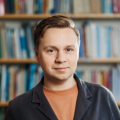 Erik Isberg is a postdoctoral researcher at the Divison of History of Science, Technology and Environment at KTH Royal Institute of Technology in Stockholm and a visiting researcher at the Centre for Sustainable Futures at the Saxo Institute. His research concerns the history of earth and environmental sciences in the 20th century and their intellectual and epistemological underpinnings.
Map of South Campus
View directions.
View on map of the Faculty of Humanities - South Campus.
View map of South Campus (pdf).