
INNER_LEAGUE interview with Michel Erpelding, Max Planck Institute
By Henrik H. Wade, intern at INNER_LEAGUE, fall 2026, MA student in Cognition and Communication, UCPH
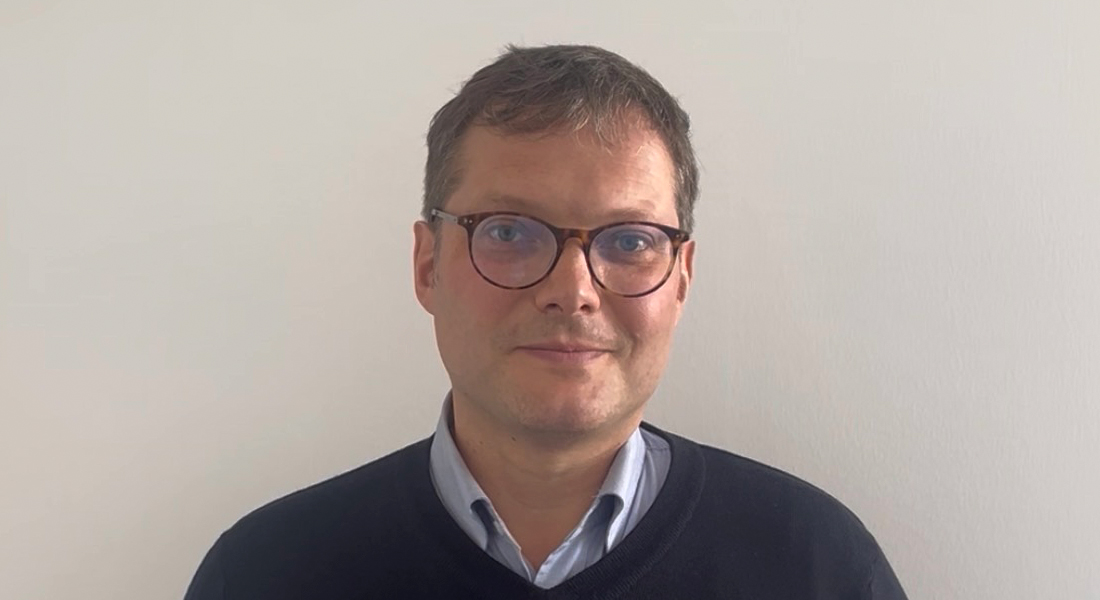
INNER_LEAGUE is excited to share the interview we had the chance to conduct with Michel Erpelding, the head of the Hidden Heritage of the European Union project.
The Hidden Heritage of the European Union, part of the Max Planck Research Groups, aims to identify how the League of Nations influenced the creation of European laws and legal institutions on regional integration in both European and (semi-)colonial contexts.
Michel’s answers shed light on both the project's inner workings and its importance.
Tell us about the project and why it is relevant to understand today?
Our project analyses to what extent the international law of the interwar period, notably the law developed within the League of Nations and other international institutions of that time, impacted the law of European integration after the Second World War. By looking at both the continuities and the discontinuities between these two legal environments, it challenges the idea that today's European law was the result of a clean break with the past. Instead, it contends that the architects of that law often built on earlier ‘experiments’ in international organisation and international adjudication, sometimes changing them beyond recognition, to create something new.
These continuities and breaks manifest themselves through institutional setups, the content of both substantive and procedural norms, as well as the legal policies and strategies developed by public and private actors to make use of these norms and institutions. While all of this happened a long time ago, some of these precedents might still serve as points of comparison for present-day debates on issues such as the role of international courts and tribunals, the role of lawyers in diplomatic negotiations, and strategic litigation.
You write on your webpage that you are pursuing alternative reappraisals of “conventional” perspectives on European integration. Can you elaborate on that? Why is that important?
Just like other recent projects on the history of European integration, we question the official institutional narrative of European integration law. Starting after the Second World War and centred around a small number of ‘Founding Fathers’, this narrative asserts that European law appeared almost like a deus ex machina in the early 1950s and followed a linear and irresistible evolution towards ever-closer integration – with occasional setbacks – until today.
Using contextualised archival sources, (legal) historians focusing on the period after the 1950s have already established the many factors – including strategies used by activist lawyers – inflecting the evolution of European law during the first decades of its existence. Applying the same methods to the period roughly situated between 1920 and 1965, our project challenges the view that all of the features radically departed from previous international law. This insight may result in two realisations: on the one hand, some European law principles and institutions are more grounded in tradition than often assumed; on the other hand, the fact that some of these principles and institutions seem well-entrenched today does not mean that they may not suffer from some of the same fragilities that affected the League of Nations in the 1920s and 1930s.
The project looks at both European cases (e.g. Danzig, Saar, Upper Silesia) and (semi-) colonial settings (e.g. international cities, protectorates, League mandates). What does it add or take away from our understanding to bring these two contexts into the same analytical frame rather than treating them as separate histories?
For some time already, historians of international law have stressed how much the dissolution of both the Ottoman and the Central and Eastern European empires after the First World War impacted the development of international law and encouraged reflections about regional federations. However, only very few studies have addressed the international institutions in both these contexts as a single phenomenon. This is all the more surprising as the lawyers working within these institutions applied comparable procedures to solve comparable issues. The fact that there were numerous examples of lawyers circulating from European to semi-colonial international institutions and back at that time further confirms the relevance of analysing these institutions within the same framework. Doing so also allows us to highlight the contribution of lawyers from Europe’s peripheries – e.g. lawyers professionally socialised in the Ottoman Empire – to the development of European law, as well as the fact that certain features nowadays associated with European law were already used in legal systems beyond Europe before the 1950s. This is another departure from the ‘conventional’ accounts of European integration, which are decidedly much more Eurocentric, neglecting the latter's post-imperial dimension.
How are you studying the actors who were involved in the development and establishment of legal instruments?
One of our main objectives is to establish a prosopography of the lawyers who were active within or before international institutions with supranational features before the establishment of European integration institutions. Based on published and archival sources, we are looking, amongst others, at their origins, their education, their professional careers and their participation in events such as treaty negotiations or diplomatic conferences. We use nodegoat, an online-based environment specially developed for social sciences, to manage, visualise, and analyse our data. Most notably, this tool will help us establish different patterns for individual groups of people within this network and get a more precise idea of the extent of personal continuities between international institutions of the interwar period and the institutions of post-WWII European integration. Of course, depending on the data we will retrieve, we do not rule out complementing our prosopographical endeavour with short biographical studies.
INNER_LEAGUE would like to thank Michel Erpelding for taking the time to answer our questions and present the project.
To read more, check out the project's website and description