
Beyond quiet quitting? An impostor, disillusioned at the League of Nations’ Secretariat
Blog post by Ph.D-student Nils Holm Peschke-Køedt
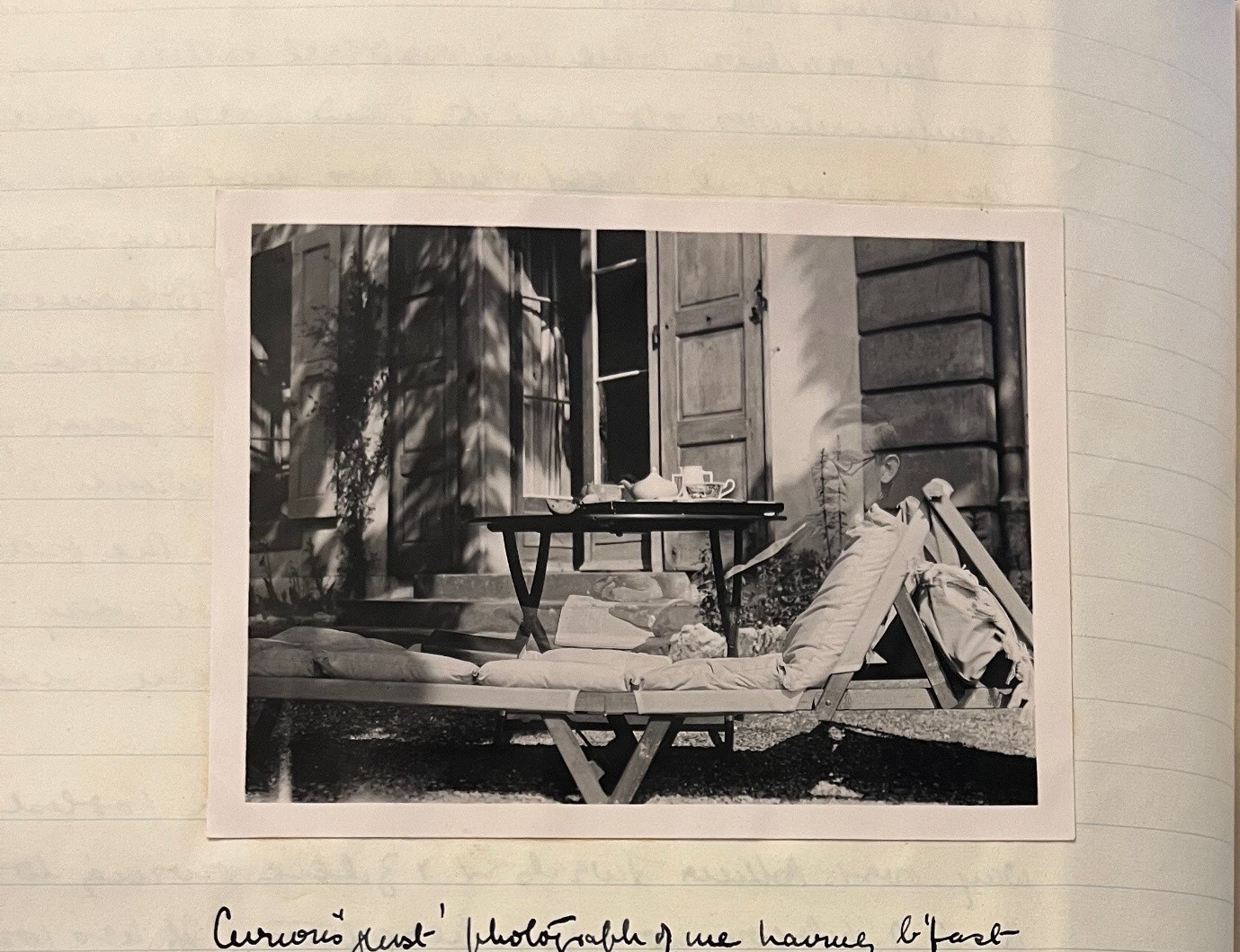
I had high hopes when I arrived at King’s College Cambridge for my first archival trip as a PhD student and skipped the line of tourists walking through the gate with a sign, NO ACCESS, to the private archives of Arthur Elliott Felkin (1892-1968). Felkin, a Briton, had been a member of the Economic and Financial Section (EFS) of the League of Nations, and I arrived with a particular research interest in mind: I wanted to find qualified archival angles that could open the bureaucracy of the EFS and illuminate the development and routinization of the Section’s modus operandi. A meta narrative which in the League of Nations’ Archives is rare to find.
I knew about Felkin from scattered mentions in scholarly publications on the League’s economic work, always portrayed in passing. As the personal assistant of the first Director of the EFS, Arthur Salter, he occupied roles close to the top of the section and popped up here and there. In that sense, he was a middle character. Neither the clerk or bike messenger of a history from below nor the Director of an elite history on the League Secretariat, but the Cambridge-educated class A official who had personnel responsibilities but rarely wielded the authority to directly influence decisions and policies.
Among his private papers I found a lengthy series of diaries recounting his life from 1916 to 1956. However, instead of the detailed reflections and descriptions I had anticipated could reveal my black box bureaucracy, what I discovered was the story of an official who seemed to have lost sight of the League’s ideals in the 1930s and strategized working as little as possible while extracting the material and emotional perks of a semi-unsupervised workplace: salary, holidays, and romantic affairs.
These records allow me to trace how broader institutional and political transformations were experienced at the individual level and introduce a complicated tension between Felkin’s own recollections and the League’s records of his usefulness and qualities. Combined, they echo contemporary notions of quiet quitting, upholding the minimal contractual obligations, and impostor syndrome, the psychological experience where people doubt their skill, requiring the reader to navigate through complex layers of performative self-explanations and institutional facts. The following text juxtaposes Felkin’s journals with League archival records to approach the social and individual experience of working at the League from 1923-1946.
“The unconscious vital force of being something”[2]
Felkin’s career as an international civil servant began at the Reparation Commission, charged with administering the reparations following the war, in 1920. Having worked as an interpreter in prison camps during the war, he found himself at the beginning of the decade in Paris wanting to leave behind the youthful desire to appear to be something and instead be something.[3] Although there are no records of what he did during these years, he came to know the General Secretary of the Commission, the British Arthur Salter, and was appointed as his personal assistant. During this period, he also married Joyce and together they had their son Hugh in 1922.
When Salter left the Reparation Commission to return to his post as director of the EFS he wanted to bring Felkin with him. This posed a significant problem for the anglophone section, at a point when the relative national distribution of officials was an important question of the League’s public neutrality and legitimacy. At the Appointments Committee, a longer discussion occurred during which the Secretary-General Eric Drummond expressed concerns about Salter hiring another Englishman. In the end, Salter’s argument that the Section was facing an exceptionally heavy workload with the financial reconstructions of Europe’s devastated areas, and that he needed a native English speaker carried more weight. Felkin was hired for a probationary period of 5 months at a rather high salary of 26,000 Swiss francs. In comparison, the Swedish economist Per Jacobsson who would go on to be the chief economist of the Bank for International Settlements in 1931 and managing director of the IMF in 1956 was kept at 19,000 Swiss francs.[4]
Judging by the complete archival gap in Felkin’s own journals, the following years were busy. With the position of member of Section, Felkin felt a sense of duty that went beyond the unenthusiastic, gray bureaucrat, embodying the esprit de corps that subsequent accounts have attributed to the early Secretariat of the 1920s.[5] On the transition from the Reparation Commission, which only gave him a “worldly satisfaction”, to the League, he noted that this was the time to set aside personal and petty dissatisfactions and simply ask what one could do for the organization.[6] This willingness was noticed by Salter, who in his recommendation for making Felkin’s position permanent, at a meeting in the Appointments Committee in 1924, emphasized his quick intelligence and industriousness, and how “it would be impossible for me either to dispense with his services or replace him without great loss of efficiency and additional strain”.[7] The permanent position was agreed to without discussion.
As can be read from Felkin’s registry index card, he spent the following years working on the financial reconstructions of Austria and Hungary and on the stabilization loan in Greece. [8] Simultaneously, he was a part of one of the flagship projects of the Section, the politically difficult question of sanctions contained in the Covenant’s Article 16. Here he did secretarial work in between the different parts of the League Secretariat, condensing legal memos from members of the Legal Section and connecting them to the EFS, as well as bringing in outside experts, most notably John Maynard Keynes and William Arnold-Forster, whom he presumably knew from Cambridge.[9]
Understanding Felkin in this period purely from the League archives thus gives an impression of a diligent and devoted official. But the journals provide the opportunity to complicate this picture. As he subsequently noted, Felkin “improved” his position from 1924-1926, and “consolidated” it from 1927-1929.[10] However, he also began and ended a series of affairs in and around the Secretariat, the first with Valentine van Muyden, a Swiss national. This relationship fills most of the journals, particularly from 1927 when van Muyden met member of the Secretariat Joseph Vivian Wilson, whom she eventually married.[11] Felkin had gotten Valentine a job at the newly created Graduate Institute, and they all belonged to the same international milieu of Geneva, so it was impossible to completely escape the couple’s presence.
“Without any real capacity, knowledge or work”[12]
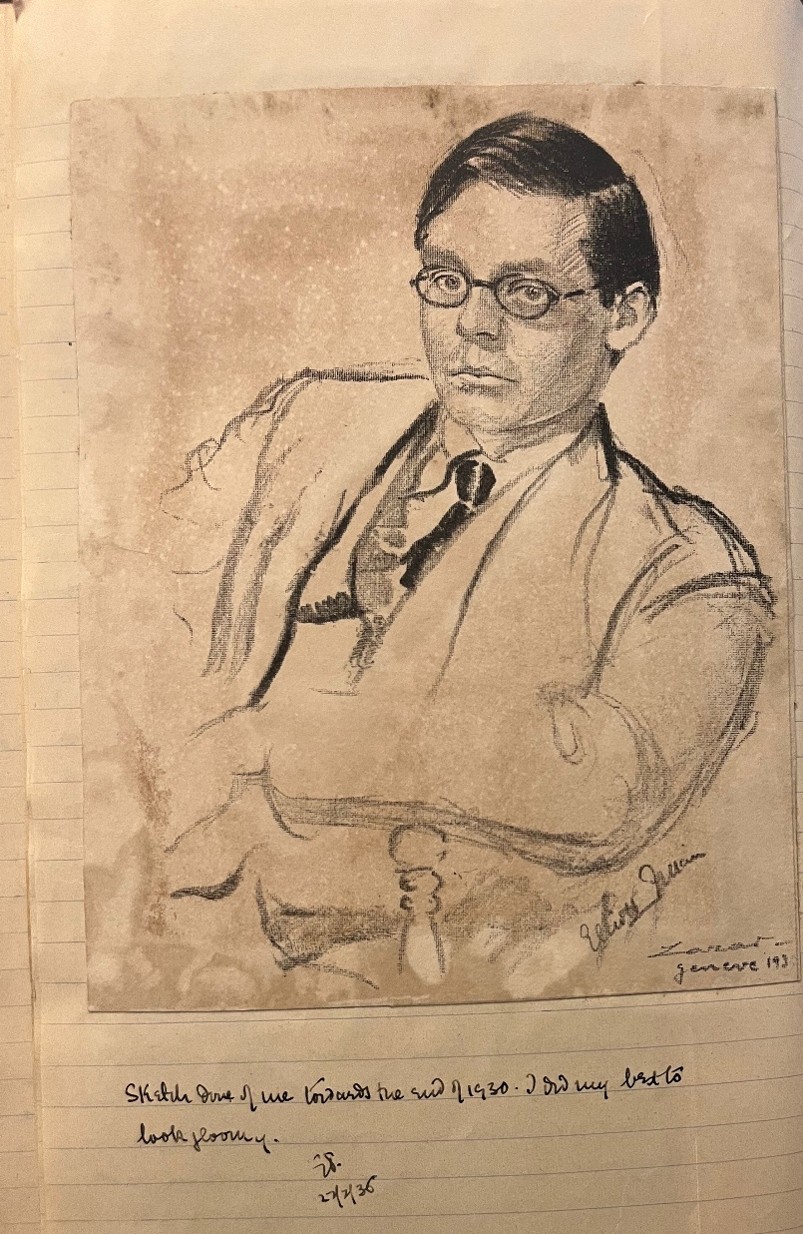
In many ways, the year 1927 was to become a turning point for Felkin and the EFS. Looking over his shoulder, Felkin was torn between wanting to meet Valentine and avoiding her altogether. The EFS and its financial reconstruction schemes faced a serious legitimacy crisis, as American money was flowing into Europe, threatening the League’s role as the technical guarantor of European reconstruction and stabilization loans.[14]
In April 1927, Salter was to join the Greek member of the Political Section Thanassis Aghnides in Athens, where the League was working to secure a Greek stabilization loan as part of an overall reconstruction project. Because Salter didn’t have the time, Felkin was quick to insert himself, glad to get away from Geneva, Valentine, and his wife and kids, and excited to sightsee the ruins of ancient Greece: “Tonight we are going to see Acropolis by moonlight […] Then Delphi!! for 2 days by car – the one thing I wanted”.[15]
This trip constituted his last “high-level” work at the League, where he participated in negotiations with the Greek political leadership. Between the touristry and dinner parties, Felkin deliberated with the Greek ministers, British civil service and League personnel in Geneva in a highly delicate political climate on Greek finances. Following the failed negotiation between the League and Bank of England, and Poland on a stabilization loan under League auspices,[16] the League was mindful of not losing its “clients”.[17] Felkin was to keep Greece in the fold, especially since the country’s minister of finance, Georgios Kafantaris, was also having talks with the German-American banker Otto Kahn.[18]
Felkin, together with the Deputy Secretary General (Secretary General from 1933) Joseph Avenol and members of the EFS Jacques Rueff and Jan van Walré de Bordes, drew up a report for the League’s Financial Committee that resulted in a stabilization loan of 9 million pounds.[19] Although Felkin’s mind was, as he notes, “full of modern Greek finances”,[20]his work was more diplomatic and social. Evaluating his success after arriving safely in Geneva and having flirted with the League secretary Miss Rafferty on the boat home, he wrote: “It is shocking how far tactfulness & just making oneself pleasant will take one without any real capacity, knowledge or work. It is also rather pleasant”.[21]
“Disillusioned & disgruntled”[22]
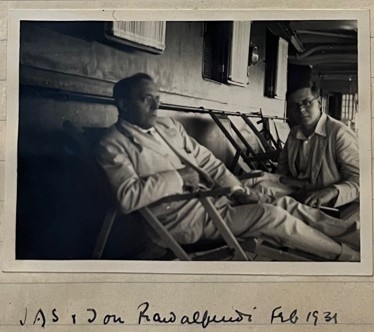
Recalling Zara Steiner’s description of ‘the hinge years’ of the interwar period,[24] 1929-1932 marked the hinge years of Felkin’s League career. For six years, Felkin had been close to Salter, which meant a great deal of influence, to the point where he was running the Financial Section together with him, Rueff and de Bordes.[25] Now three different but interconnected institutional changes rattled the situation. First, Salter’s departure meant that Felkin’s direct line to influence was removed. Second, new directors were coming on who had different ideas of the directions the Section was moving. Third, as Patricia Clavin has shown in her influential monograph on the League’s economic and financial work, the Great Depression was not the end of the Section’s justification. On the contrary, it invigorated the organization to develop new methods, increasingly analytical and theoretical, and in this line of work, Felkin couldn’t carry the same weight.[26]
Initially, Salter’s departure came with some anxieties and a sense of excitement. Felkin had been approached for a job at The Institute of Pacific Relations, and he reported talks of his becoming Drummond’s secretary. While also noting that he was becoming increasingly lazy and indifferent, in 1930 he was intent on showing how far he could make it now that he was on his own.[27] With all his ambitions of using his diplomatic tact in the more political parts of the League, Felkin found himself in charge of the internal administration of the Section from 1931 onwards. By then, his earlier sentiments about acquiring higher positions had given way to the dream of a simple and quiet life. But while this suited him well, the talk of crisis and dismissals threatened to interrupt his monotonous work. In 1932 he noted how he was becoming increasingly disillusioned by the Secretariat’s “petty strains & personal ambitions, the cumbersomeness & grinding of the wheels; the inertia & opposition”.[28]
By 1933 the disillusionment had accelerated, and Felkin started doing less work and felt more anxious that he would be caught. The failed London World Economic Conference in 1933,[29] and the general decline of internationalism led him, in his own commentary, to turn away from his initial sense of duty. He noted how he found political discussions with his colleagues “dull or distasteful - partly no doubt owing to the depressing history of the League in the past years”.[30] Still, the regular hours of the administrative work suited him, and his new supervisor at the Financial Section and Economic Intelligence service, Alexander Loveday, acknowledged his gift for administration and his understanding of “the importance of perfecting the mechanical detail in order to carry out effectively the broad principle of sound policy”,[31] which lay at the core of the Section’s new raison d'être under the statistician Loveday’s direction.[32] Here then, the tension between Felkin’s self-understanding and Loveday’s assessment of his institutional usefulness becomes apparent.
In 1934, Felkin’s tentative experiments in reducing his work formalized into a more deliberate strategy of doing the “minimum possible consistently with being kept on my work securely & those who decide my fate being fairly satisfied with my work”.[33] By then, all the ideals of the League’s mission had given way to the worldly benefits of the job, and Felkin calculated how many years he would have to endure. After the ordeal with Valentine, he had in the beginning of the 1930s initiated a relationship with Helen Saunders who was working in the indexing Section of the League, and who was married to Hilary Saunders who worked as a translator and précis writer for the League. This potential marital drama, however, did not cause Felkin a lot of concern. The three of them had frank conversations, and Mr. Saunders had his own office affairs to attend to as well as his production of League-centered spy novels.[34]
Between his relationship with Helen, the Section’s reorientation, and his quiet quitting strategies, the years from 1934-1937 marked a definitive decline in Felkin’s efforts and his relationship with Loveday. In 1935 Felkin had lost all interest in his work and dropped some of the routine tasks that he had previously done. At the same time, he started to attribute parts of this decline to Loveday whom he found “greedy of power” and taking away “all initiative & sense of responsibility”.[35] When Felkin was in charge of administering the Section’s transfer to the new Palais des Nations, he made sure to move his own office further away from Loveday’s.[36] By 1936, he spent 5 hours a day there, using the time to write his journal, resting after his morning exercises, and eating fruit and chocolates in his armchair.[37]
The culmination came in 1937. For the first time since Salter’s departure, Loveday’s annual review struck fear into him. Loveday wrote that a man of Felkin’s qualities was being wasted on only doing administrative work and suggested that he was given more and different work.[38] Curiously, Loveday dedicated a section in his 1956 book on international administration to the question of what one should do about “lazy, incompetent, or dishonest officials”, writing firstly, that international officials were more liable to emotional strain – echoing the words he had actually written in Felkin’s annual reviews.[39] Felkin was himself aware that the situation wasn’t sustainable and applied for any job he could find, including a secretaryship of the Auctioneers’ Institute.[40] At this point, there were general cutbacks in the Secretariat and one can sense Felkin’s anxieties, even if he hated the office and was filled with resentment.[41]
After 14 years in the EFS, Felkin was on the brink of being caught out. From his initial years working closely with the prestigious financial reconstructions of Europe to the administrative streamlining of the Financial Section and Economic Intelligence Service, he was increasingly gripped with paranoia concerning his position. He heard rumors from his closest colleagues, Royall “Peter” Tyler and René Charron, that Loveday was about to expose him. Privately, Helen, whom he had for five years hoped to marry, had died of cancer in February 1937. An illness that had filled their relationship and led Felkin to consider his own health and nicotine intake. By any measure, going into the year 1938 Felkin’s prospects seemed dire.
“A standing miracle that an organization will go on paying me 12-1300£ p.a. for doing next to nothing”[42]
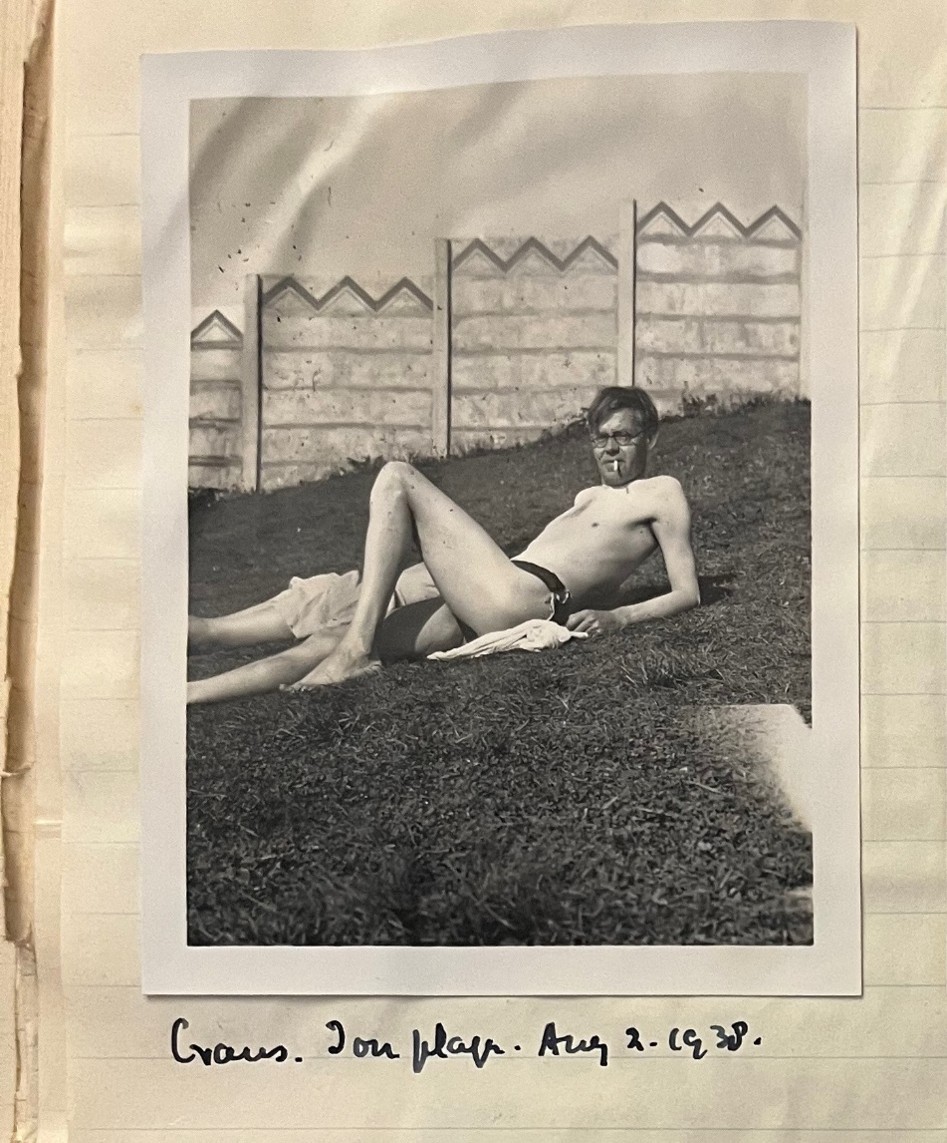
In the summer of 1938 Felkin was temporarily loaned out to the Permanent Central Opium Board (PCOB) acting as its secretary. This was probably his ideal job for several reasons. First, the board was essentially a committee of experts meeting around 4 times a year. As secretary, Felkin would oversee the preparation in between these meetings, a line of work he knew exceedingly well from the Financial and Fiscal Committees of the League’s Economic and Financial Organization (EFO). Second, the PCOB was essentially a semi-independent body under the Social Section which meant that the closest to a director for Felkin were the members of the board. In practice, Felkin thus had no superiors and no one to do his annual reviews. He was set free from the institutional reins that had, in his own commentary, limited him for several years.
Unsurprisingly, Felkin happily noted that his new job was incredibly light, leaving plenty of time for love affairs.[44] Heading a small secretariat of 4 people, Felkin had stumbled upon a small organizational lacuna where he was insulated from the Secretariat departures that increasingly permeated the League. This, however, didn’t translate to him working harder. Even though he was conscious about his temporary trial position, he continued to “skimp” his duties throughout 1938.[45] But in the spring of 1939 the position became permanent and Felkin finally seemed on his way to the retirement he was planning.
Throughout the war years, after initially planning to go to France anticipating the Secretary General Joseph Avenol’s alignment of the League to the Vichy Regime,[46]Felkin followed Loveday and the rest of the EFS to the US and moved the operations of the PCOB to Washington where he lived with his wife and daughter, while his son was still in Geneva. Without any clear procedure, he was in 1946 taken in and given a pay raise by what he called “the hopeless muddle and incompetence of the UN organization”,[47] and divorced his wife of 26 years. Here he continued in his position until his retirement in 1956. On the threshold of the new world organizations that were to attempt to correct the mistakes of its predecessor, he encapsulated the lessons he brought with him: “I don’t read the incoming letters. Only open them in order to collect the stamps in case I can sell them at a good price after I have left.”[48]
Concluding thoughts
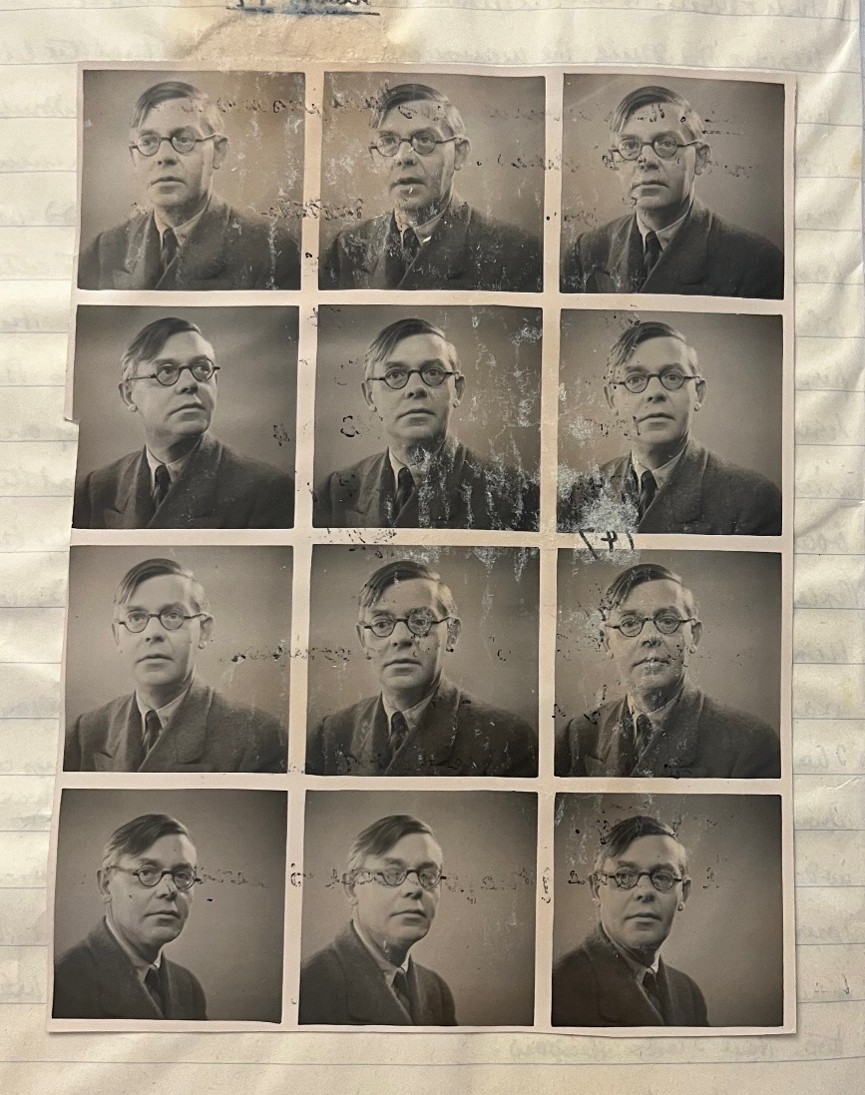
In many regards, Felkin appears to be marginal for a history of the League: Why should we care that one official seemingly exploited the Secretariat for love affairs and undeserved salary? Because he was a middle character throughout the organization’s history, from the financial reconstructions through the analytical reorientation to the split between Loveday leading the EFS into exile in Princeton and Avenol’s attempted alignment with the Vichy Regime,[50] and because he himself connects the individual to the structure when he ties his lost motivation to the League’s decline in the 1930s.
Read alone, the journals provide a straightforward story of an esprit de corps that followed the League’s waning influence, from the early optimism through routinization to withdrawal and disillusionment. The interesting tension arises when this is contrasted with the institutional records that show his administrative usefulness and positive assessments. The methodological question then becomes to disentangle the layers of performativity and evasive self-explanations from the historical reality.
Although the two sources differ in emotional range, the League records temper Felkin’s own accounts to some degree. They suggest that Felkin didn’t acknowledge his administrative contribution because he longed for the heyday of the direct and diplomatic work of the 1920s. As Salter prepared to leave in 1930, he recorded how his disposition wasn’t suited for the future, technical work,[51] a disposition perhaps closer to Felkin’s than Loveday’s. In that sense, the tactful generalist was lost in the Section’s reorientation, and the feeling he had voiced in 1927, of getting by “without any real capacity”, grew into a sense of being an impostor.
Finally, the League records confirm that Loveday did indeed notice Felkin’s quiet quitting in the 1930s. Whether he went beyond it at the PCOB and the UN is a question for another archive.
References
[1] Felkin Papers. AEF/1 vol. 15, p. 94, King’s College Archives (KCA)
Images reproduced by kind permission of the copyright holders.
[2] Diary entry 20th January 1920. Felkin Papers. AEF/1 vol 6, p. 3. KCA
[3] Diary entry 20th January 1920, Felkin Papers. AEF/1 Vol. 6, p. 3. KCA
[4] League of Nations Archive (LoNA), Dossier S954-263-1, Minutes of the 15th Appointments Committee 4th December 1922, p. 8.
[5] Egon F. Ranshofen-Wertheimer, The International Secretariat: A Great Experiment in International Administration. Washington, Carnegie Endowment for International Peace, 1945
[6] Diary entry March 14th 1923. Felkin Papers. AEF/1 vol 6., p 27. KCA
[7] LoNA, Dossier S954-263-2, Recommendation January 2nd 1924, PDF p. 265
[8] An internal League registry of documents produced by individuals, LoNA Period 1, Felkin
[9] LoNA, Dossier S121-71-4, E. Felkin memoranda, Economic Sanctions, Part 1, see letters and Keynes’ “Dear Elliott”, pdf p. 339
[10] General Summary 1930, around Dec. 1930. Felkin papers. AEF/1 vol. 9 pt2, p. 577. KCA
[11] Auberer, Benjamin. “From the Australian Bush to the International Jungle”: Internationale Karrieren und der Völkerbund. Heidelberg University Publishing (heiUP), 2023.
[12] Diary entry May 7 1927. Felkin papers. AEF/1 Vol. 7, p. 104. KCA
[13] Felkin Papers. AEF/1 Vol. 9, p. 581, KCA
[14] Letter from Salter to Montagu Norman April 29 1927, LoNA, Reorganisation of Financial Committee, Dossier S123/73/2, p. 37
[15] Diary entry April 15 1927, Felkin papers, AEF/1 vol.7, p. 86, KCA.
[16] Allen, William A. “Poland, the International Monetary System and the Bank of England, 1921 – 1939”. SSRN Electronic Journal, advance online publication, 2019. https://doi.org/10.2139/ssrn.3507632.; Leszczyńska, Cecylia. “The Bank of Poland and Monetary Policy during the Interwar Period”. In The Spread of the Modern Central Bank and Global Cooperation, 1. ed., edited by Barry Eichengreen and Andreas Kakridis. Cambridge University Press, 2023. https://doi.org/10.1017/9781009367578.010.
[17] Salter to Montagu Norman April 29 1927, LoNA, Reorganisation of Financial Committee, S123/73/2, p. 37
[18] Diary entry May 7 1927, Felkin papers, AEF/1 vol. 7, p. 102, KCA.
[19] Hill 1931 ”The League of Nations and the Work of Refugee Settlement and Financial Reconstruction in Greece, 1922—1930”, Weltwirtschaftliches Archiv, 34, p. 265-283.
[20] Diary entry April 25 1927, Felkin papers, AEF/1 vol. 7, p. 90, KCA
[21] Diary entry May 7 1927, Felkin papers, AEF/1 Vol. 7, p. 104, KCA.
[22] Annual summary 1932, around December 1932, Felkin papers, AEF/1 vol. 11, p. 68, KCA
[23] Felkin Papers. AEF/1 vol. 10, p. 53, KCA.
[24] Steiner, Zara. The lights that failed: European international history, 1919-1933. Oxford history of modern Europe. Oxford University Press, 2005.
[25] Salter memo Oct. 1929, Churchill College Archives, SALT 1/4 pt. 2 of 2
[26] Clavin, Patricia. Securing the World Economy: The Reinvention of the League of Nations, 1920 - 1946. 1. ed. Oxford Univ. Press, 2013.
[27] General Summary 1930, around December 1930, Felkin papers, AEF/1 vol. 9, p. 577-8, KCA
[28] Annual summary 1932, around December 1932, Felkin papers, AEF/1 vol. 11, p. 68, KCA
[29] Clavin, Patricia. “Explaining the Failure of the London World Economic Conference”. In The Interwar Depression in an International Context, edited by Harold James and Elisabeth Müller-Luckner. Oldenbourg, 2002. https://doi.org/10.1524/9783486594485.77.
[30] Annual Summary 1933, around December 1933, Felkin papers, AEF/1 vol. 12, p. 139, KCA.
[31] Loveday’s annual review of Felkin 1933, LoNA, S767-72-1199.
[32] See for example Loveday, Alexander 1938, “The Economic and Financial Activities of the League”, International Affairs, Vol. 17 (6), p. 788-808.
[33] Annual Summary 1934, December 1934, Felkin papers, AEF/1 Vol. 13, p. 155, KCA
[34] Auberer blogpost 2018, “Murder, Intrigue, Sex and Internationalism - Novels about the League of Nations”, https://projects.au.dk/inventingbureaucracy/blog/show/artikel/murder-intrigue-sex-and-internationalism-novels-about-the-league-of-nations
[35] Annual Summary 1935, around December 1935, Felkin papers, AEF/1 vol. 14, p. 138, KCA.
[36] New League Buildings. Allocation of Offices. Economic Intelligence Service and Financial Sec. LoNA R5493-18B-17195-10199
[37] Annual Summary 1936, December 1936, Felkin papers, AEF/1 vol. 15, p. 181, KCA.
[38] LoNA, S767-72-1199, p. 351
[39] Loveday 1956, Reflections on international administration. Oxford, Clarendon Press.
[40] Annual Summary 1937, December 1937, Felkin papers, AEF/1 vol. 16, p. 155, KCA
[41] Ibid., p. 155
[42] Annual Summary 1939, December 1939, Felkin papers, AEF/1 vol. 18, p. 190, KCA
[43] Felkin Papers. AEF/1 vol. 17, p. 55, KCA.
[44] Annual Summary 1938, December 1938, Felkin papers, AEF/1 vol. 17, p. 92, KCA
[45] Ibid., p. 92
[46] Chronology of 1940, Feb. 23 1941, Felkin papers, AEF/1 vol. 19, p. 116, KCA.
[47] Annual Summary 1946, December 1946, Felkin papers, AEF/1 Vol. 21, p. 82, KCA.
[48] Annual Summary 1946, December 1946, Felkin papers, AEF/1 vol. 21, p. 83, KCA.
[49] Felkin Papers, AEF/1 vol. 17, p. 88, KCA.
[50] Moraes, M. 2020. “Internationalism as an Organisational Practice: the League of Nations Secretary-General, 1918-1946.” PhD thesis, University of Oxford.
[51] Conversation between Drummond and Salter 4-5 March 1930, Churchill College Archives, SALT 1/4 pt. 2 of 2